24/7 emergency response · the Charleston Tri-County
Mold remediation built for Charleston's climate
Charleston's heat, humidity, and flood-prone lowland lots make mold the area's most common indoor problem — in crawlspaces, behind walls, in HVAC systems and hundred-year-old houses alike. Containment, removal, and fixing the moisture source so it doesn't come back.
What's involved
What we do
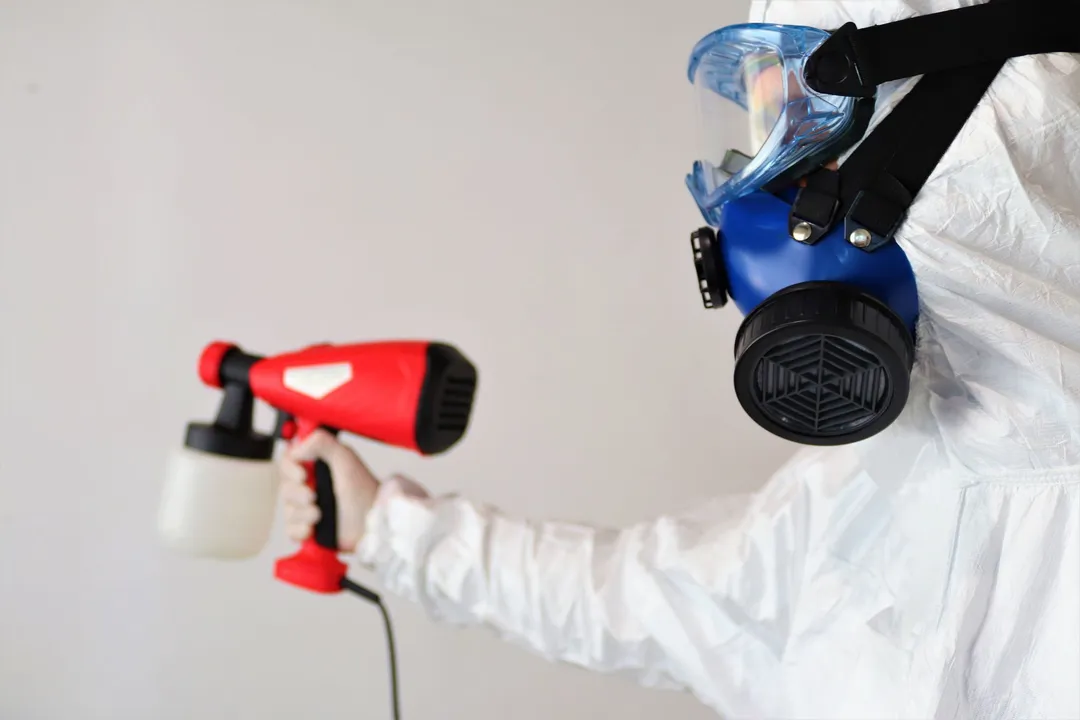
- Containment and HEPA filtration so spores don't spread during the work
- Removal of damaged material and treatment of salvageable structure
- Finding and fixing the moisture source — the step that prevents regrowth
- Drying signed off on meter readings, not on a date
- Old-house materials assessed for what's genuinely salvageable
- Crawlspace and HVAC mold handled — the two places Lowcountry mold hides most
Locally, this is the most-searched restoration service in the Charleston area.
We serve Charleston, Mount Pleasant, North Charleston, Summerville, Goose Creek, Hanahan and the rest of the Charleston Tri-County. Same-region crews, no long waits for someone to drive in.
See all service areas → What it costs in 2026 →In plain terms
Testing or remediation — which one do you actually need?
Search this and half of what comes back is inspection companies, which muddies a fairly simple decision. If you can see growth and you already know where the water came from, a lab report usually buys you nothing: the species doesn't change the remedy, and the money is better spent on the removal and the repair. Testing earns its fee in three situations — a smell with no findable source, a boundary you need established before committing to demolition, or a dispute where somebody other than you has to be convinced (a landlord, a buyer, an adjuster). In that last case get it from an independent assessor rather than from whoever is bidding the removal, and that includes us. A company that sells you a test and then sells you the answer to the test has an obvious problem. We go deeper on the distinction in our guide to mold testing versus remediation in Charleston.
Around here the water usually comes from below
Most Lowcountry mold isn't the result of a dramatic event. It's the result of a house sitting a few feet above a water table that moves with the tide. Ground stays saturated, crawlspaces stay damp, and the vents that older building practice put in to dry them out do the opposite for most of the year — pulling warm marine air into a cool space where it gives up its moisture on joists, ducts and subfloor. Add tidal flooding that arrives on a schedule rather than as a disaster, and the result is a building envelope that never gets a long dry spell to recover in. That's why so many calls here start under the floor rather than in a room, and why fixing a crawlspace is often the whole job rather than a side note to it.
Old houses: what's genuinely salvageable
A great deal of Charleston's housing stock predates every material modern remediation assumes, and that cuts both ways. Heart pine framing and floor structure is dense, slow to take up water, and frequently survives an event that would have destroyed dimensional lumber — it usually deserves cleaning and drying rather than removal. Plaster on wood lath is the opposite kind of problem: the lath and the cavity behind it hold moisture long after the wall face reads dry, so a meter on the surface can tell you a comfortable lie. What we won't do is treat an old house like a new one and open more of it than the readings justify, because in a building like that the replacement is rarely equivalent to what came out. If something irreplaceable is involved, say so early — it changes the sequence, not just the price.
How it works
A clear process, start to finish
Call or request a callback
Tell the line what happened and where. Water and storm events run as emergencies — the clock matters in this climate.
Assessment on site
Moisture readings, photos, and a written scope of what needs to happen — before any work begins, so nothing surprises you.
Mitigate & restore
Containment, extraction, drying, removal — the right sequence for the loss, documented step by step as we go.
Insurance squared away
Documentation formatted the way adjusters expect it, and direct coordination with your carrier on covered claims.
Straight answers
Mold Remediation questions we hear most
Do I need mold testing before remediation?
Most of the time, no — and the section above walks through exactly when it's worth paying for. Short version: visible growth with a known water source doesn't need a lab to tell you what to do next. Buy testing when you need a boundary established, a smell traced, or a third party convinced — and buy it from someone who isn't also bidding the removal.
Can't I just spray it with bleach?
On a sealed surface like tile or glass, sure. On anything porous — framing, drywall, subfloor — you're bleaching the visible part of something whose roots are inside the material, so the stain fades and the colony doesn't. The bigger issue is that bleach is mostly water, and adding water to a Lowcountry crawlspace problem is working against yourself. Take the material out or clean it properly, then go after whatever is keeping it damp.
It grew back in exactly the same place. Why?
Because whatever put water there is still putting water there. In this area that's usually one of four things: a crawlspace that runs at outdoor humidity all summer, ductwork sweating inside a wall or floor cavity, a roof or flashing detail that only leaks in wind-driven rain, or ground water arriving from a lot that doesn't drain. Growth in the identical spot twice isn't a treatment failure — it's a diagnosis that never happened. Chasing that source is written into our scope rather than quoted as an extra.
My crawlspace takes water on king tides. Is remediation even worth doing?
It is, but the order matters or you'll pay twice. Remediating a space that will be wet again next month is genuinely wasted money — so on a tidally-influenced lot the conversation starts with what can be changed (drainage, a sealed and conditioned crawlspace, a vapor barrier, sometimes a sump) and what simply can't. Where the water can't be fully stopped, the honest goal shifts from a permanent fix to a manageable one: materials down there that tolerate getting wet, growth kept off the structure, and a space you can actually dry out afterward. We'd rather tell you that up front than sell you the same job twice a year.
Somebody told me it's black mold. Should I be alarmed?
Treat that as marketing until a lab says otherwise. Colour tells you essentially nothing — a great many ordinary species are dark, and identification takes a sample and a microscope. It also wouldn't redirect the work: contain the area, take out what's colonised, dry the structure, kill the water supply. We're not doctors and won't pretend otherwise about health effects; what we'll say plainly is that a company using the phrase to accelerate your decision is telling on itself.
Will my insurance pay for this?
In the Lowcountry the first question is always which policy. Rising or tidal water is flood, which means an NFIP or private flood policy — your homeowners policy will not cover it, and mold that follows flooding generally follows the flood claim. Wind-driven rain from a named storm usually sits with homeowners, often behind a percentage hurricane deductible rather than a flat one, which surprises people. And mold from a sudden internal failure — a supply line, a water heater — is typically covered up to a mold sublimit that is smaller than most people expect. Find out which bucket you're in before you start, and photograph everything first.
How long does the work take?
Removal moves quickly. Drying is what you plan around, and in this climate it's slower than most people expect, because the outdoor air isn't helping — dehumidification is doing the work. A single contained area is often a matter of days; a crawlspace where the structure itself has to come down to target readings takes longer, and if the real repair belongs to a plumber or a drainage contractor, their schedule sets ours. We finish on readings rather than on a promised date.
Get help fast
Tell us what happened
Water, mold, fire, or storm damage — send a few details and we'll call you back to assess it. For active emergencies, calling is fastest: (843) 825-9092.
- 24/7 emergency response for water & storm emergencies
- We document everything for your insurance claim
- Serving all of the Charleston Tri-County
What happens when you reach out
- Tell the 24/7 line (or this form) what happened and where — two minutes.
- We call you back fast to talk it through and set the on-site visit.
- Assessment first, in writing — work starts only when you say go.